A guide for families in Brighton-le-Sands wondering whether a loved one could benefit from a little extra help at home. Honest and unhurried.
You have probably not used those words before. Home help.
They may have felt too formal for what you are actually thinking about — which is something quieter. A question you have been carrying for a while, returning to at odd moments. On the drive home after a visit. Last thing at night.
This page is written for that moment. Not to sell you anything. Not to push you towards a decision before you are ready. Simply to help you think — about what you are noticing, about what home help actually is and is not, about what the right next step might look like.
If you arrive here uncertain and leave a little clearer, this page has done what it set out to do.
They are rarely dramatic, the early signs. That is part of what makes them so easy to explain away.
The fridge on your last few visits was not quite what it used to be. Not empty — your parent would not want you to think that — but lighter. A few basics missing. Less variety than there would once have been. You mentioned it to yourself on the way home and then let it go.
The meals have become simpler. Soup from a tin where there would once have been something made from scratch. Toast standing in for lunch. A ready meal in the fridge that would have been unthinkable a few years ago. Nothing alarming, but different.
The house feels slightly different too. Not neglected — that word is too strong and would not be fair. But the surfaces that were always clear are gathering things. The laundry is a day behind. The garden, which was always tended with genuine pleasure, is looking a little more left to itself than it was last summer.
And they are getting out less. Not dramatically — they are quick to say they are perfectly fine, thank you — but the morning walk happens two or three times a week rather than every day. The neighbour’s invitation for coffee last Tuesday was turned down. The weekly shop, which was always a proper outing with stops and time taken over it, is now something to get through rather than something enjoyed.
Then there is the “I’m fine.”
You know the one. It comes a fraction too quickly. With a small extra firmness. As though the question itself is the problem, rather than the answer.
None of these things, on their own, means very much. Families explain each one away and they are usually right to. But when they appear together — and when they have been appearing together for a few months — they are often the moment at which a small amount of the right support makes the most difference. Not because a crisis is coming, but because the balance has shifted. And because it is much easier to address a shifted balance than to restore one that has tipped.
Most families who contact us are not certain what they need. They simply know that something has changed, and that they want some reassurance. A conversation is all it takes to start.
This is the question that brings most families to a page like this. And it is the right question — even if the timing of asking it almost always feels slightly wrong.
Ask too early, and it feels presumptuous. Your parent is managing. They have not asked for help. They might feel offended by the suggestion, or unsettled by what it implies. You do not want to say something that cannot be unsaid.
Wait too long, and the moment you were hoping to avoid arrives anyway — a hospital admission, a fall, a situation that has to be managed quickly, with whoever is available, without the time to do it carefully.
You might be reading this at eleven o’clock on a Tuesday night, not quite sure whether what you are worried about is as significant as it feels, or whether you are getting ahead of yourself. That uncertainty is normal. Most families who eventually arrange home help describe a period of weeks — sometimes months — of sitting with exactly that feeling before doing anything about it.
In our experience — and between our three founders, it runs to several decades of supporting older people and their families — the families who find the transition easiest are the ones who began thinking about it before it became urgent. Not because they were catastrophising. Because they gave themselves time.
Time to find the right person. Time to let trust develop gradually. Time for their parent to become comfortable with a regular helper while they were still well enough to genuinely enjoy the company, rather than simply need the support. That difference matters enormously — to how the relationship develops, and to how the older person feels about it.
Home help is not a last resort. It is not an admission that things have become unmanageable. It is a practical response to the ordinary reality of getting older — the reality that things which once happened effortlessly begin to require more effort, and that a little consistent support can keep everything else steady for much longer than most families expect.
If you are reading this and recognising something, that recognition is worth taking seriously. You do not need to have reached a conclusion. The fact that you are thinking about it is itself information.
At its simplest, home help is practical support for the ordinary things that make an ordinary day work.
Someone who comes on agreed days and helps to keep the week running as it should. Who prepares a proper meal in the client’s own kitchen — cooked with care, using the ingredients they keep and the preferences they have held for decades — and who sits with them while they eat, if that is what is wanted. Who accompanies them to the shops at their own pace, to the places they know, doing the weekly shop in the way it has always been done. Who keeps the house comfortable — not intrusively, not reorganising things according to someone else’s idea of order, but maintaining the home in the way its owner would want it maintained.
Who notices if something is not quite right. Who remembers what was talked about last week. Who is, over time, genuinely known — and who genuinely knows the person they visit.
That last part is not a detail. It is the point.
Home help works because it is consistent. The same person, at the same times, fitting into the existing shape of someone’s week rather than disrupting it. A helper who visits regularly learns which mug is the right one and why the kitchen is arranged the way it is. An older person who has a regular helper learns that the knock on the door on a Tuesday morning belongs to someone they know, and that the next two hours will go the way they expect.
This is how trust develops — not through a single good visit, but through many ordinary ones. And it is this accumulated familiarity that makes the relationship useful in ways that are difficult to describe in a service list.
A familiar helper notices a change in mood before it has become obvious to anyone else. They notice when the appetite is different, when the energy is lower, when something mentioned last week has quietly resolved or quietly worsened. They are not monitoring. They are simply paying the kind of attention that comes naturally when you know someone well — and that is absent when a different face arrives each time.
For families who live at a distance, or who are managing their own lives alongside a growing concern for a parent, this continuity is one of the most valuable things a home help service can offer. Not just the practical tasks, but the knowledge that someone who knows their parent well is there regularly — and would notice if something was wrong.
Brighton-le-Sands sits right on the coast, tucked between Blundellsands to the north and Waterloo to the south, with Crosby Beach and the famous Antony Gormley "Another Place" statues just along the shore. It's the kind of place where a seafront walk is woven into daily life rather than a special occasion.
The area has a settled, residential character — many families here have lived nearby for generations, and the sense of a close, established community is something residents mention often when they talk about what matters most to them about staying at home.
These are not small things to give up. For many older people in Brighton-le-Sands, they are not things they are prepared to give up at all — and they should not have to be.
What home help can do, when it works as it should, is remove the practical obstacles that might otherwise force a change that nobody wants. The meal that is not getting cooked. The shopping that has become too much to manage alone. The seafront walk that happens less often than it used to, not because the wish to go has faded but because getting there and back has quietly become harder.
Addressed at the right time, these things are manageable. The right support keeps the balance — allowing someone to remain exactly where they want to be, close to the coast and the neighbours they know, for longer than they might otherwise manage, and with considerably more ease.
We cover all of Brighton-le-Sands and the surrounding roads. If you are unsure whether your road falls within our area, call us and we will confirm immediately.
Three registered nurses who built the service they would have chosen for their own mothers. Based in Formby. Personally involved in every client relationship. When you call, one of them answers.
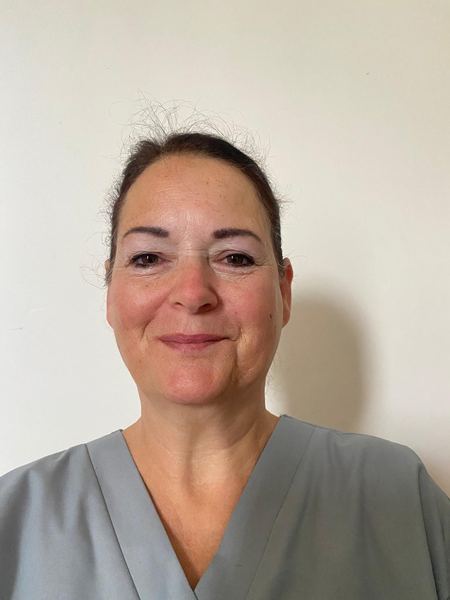
With years of hands-on care experience in residential and community settings, Anita brings practical knowledge and quiet authority to everything we do. A mother of eight, she understands family life from the inside — the weight of responsibility, the importance of trust, and what it means to invite someone into a home that matters. She personally oversees quality across all client relationships.

A qualified Registered Nurse, Natalie ensures every aspect of our service is safe, considered and clinically informed. Her professional framework gives families genuine confidence — knowing nursing expertise underpins everything, even when the tasks themselves are practical.

Nicola’s nursing career has always been defined by attention to the whole person — not just the presenting need, but the emotional experience and sense of identity. She ensures every client feels genuinely heard, valued and cared for.
These are two distinct things, and families should not be expected to arrive already knowing the difference.
Regulated personal care — helping someone to bathe, dress, use the toilet, manage their medication — requires providers to be registered with the Care Quality Commission. Select Home Care Services is not a CQC-registered provider and does not carry out these tasks.
What we provide is practical, social and domestic support: meals prepared in someone’s own kitchen, accompanied shopping trips, light housekeeping, companionship, help getting to and from appointments, support with technology, daily welfare check-in calls, post-hospital recovery support and planned respite for family carers.
If you are unsure which applies to your situation, ask us. We will give you a straight answer. If what is needed is something we cannot provide, we will say so and do our best to help you understand what the right kind of provider looks like. This is not a difficult position for us. It is simply how an honest service operates.
We do not provide
Bathing & washing Dressing Toileting Medication administration Nursing treatmentWe do provide
Companionship Meal preparation Shopping & errands Light housekeeping Appointment accompaniment Digital support Post-hospital support Welfare check-in calls Respite for family carersIn many cases, home help and regulated care work comfortably alongside each other. We are experienced in supporting clients who receive personal care from a regulated provider and home help from us.
£33 per hour. Every service. No exceptions.
No registration fees · No hidden costs · No minimum commitment · No long-term contracts
If you have a question not answered here, please call us on 01704 333 188. We are always happy to talk without pressure or obligation.
See All QuestionsIncluding Waterloo and Blundellsands
View →Town centre, Hesketh Park and surrounding areas
View →Including Woodvale
View →All residential areas
View →Including Blundellsands
View →Including Waterloo and Blundellsands
View →And surrounding villages
View →Some families ring us having thought about it for a single afternoon. Others have been sitting with the question for the better part of a year.
Whenever you are ready, the conversation will be the same: unhurried, honest and without any expectation that you will commit to anything. One of our founders will listen carefully and give you their genuine view of whether home help is likely to make a difference.
If we are not the right fit, we will say so. We would rather tell you that early than have a family spend time pursuing something that is not quite right for them.